The Visionary Who Bent the Universe
On October 5, 2011, newspapers, broadcast networks, and digital portals across every continent suspended normal programming. From Cupertino to Tokyo, London to Singapore, the world united to mourn Steve Jobs—the architect of modern computing, typography, and personal industrial design.
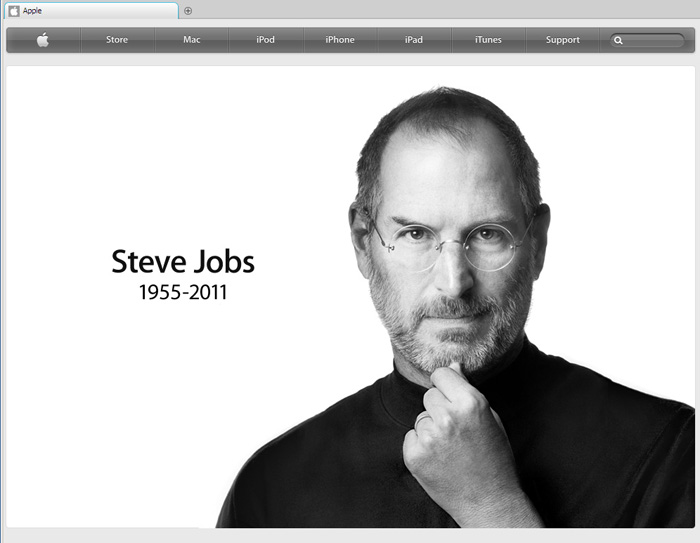
The Life & Breakthroughs of Steve Jobs
A transformative polymath who operated at the intersection of technology and the liberal arts, reshaping personal computing, digital typography, computer animation, music, telecommunications, and slate computing.
Steven Paul Jobs (February 24, 1955 – October 5, 2011)
Born in San Francisco, California, and adopted by Paul and Clara Jobs, Steve was raised in Mountain View and Los Altos during the birth of Silicon Valley's semiconductor revolution. A visionary with an unrelenting obsession for aesthetic purity and functional craftsmanship, Jobs realized early that computers should not be cold, intimidating industrial machines, but intuitive extensions of human capability.
Over four extraordinary decades, Jobs co-founded Apple Computer, founded NeXT (which created the software architecture powering today's macOS and iOS and hosted the invention of the World Wide Web), acquired and nurtured Pixar into the premiere animation studio of the digital age, and returned to rescue Apple from near-extinction—transforming it into the most valuable and design-revered enterprise in world history.
Apple I, Apple II & The Personal Computer Boom
In 1976, working from the garage at 2066 Crist Drive in Los Altos with Steve Wozniak, Jobs co-founded Apple Computer. While Wozniak engineered the circuitry, Jobs championed packaged consumer convenience.
- The Apple I (1976): Hand-assembled motherboard for hobbyists.
- The Apple II (1977): The first mass-market PC with built-in color graphics and molded plastic casing.
- Apple IPO (1980): Instantly created 300 millionaires, proving personal computing viability.
The Macintosh & Digital Typography
Introduced with Ridley Scott's iconic "1984" Super Bowl commercial, the Macintosh replaced archaic command-line terminals with the mouse, desktop metaphor, windows, and proportional fonts inspired by Jobs' calligraphy studies at Reed College.
- First mass-market Graphical User Interface (GUI) computer.
- LaserWriter & Aldus PageMaker: Ignited the desktop publishing revolution.
- Proportional digital fonts (Chicago, Geneva, Helvetica).
Object-Oriented OS & The Birth of Pixar
After leaving Apple in 1985, Jobs launched NeXT Computer and acquired Lucasfilm's Computer Graphics Division for $10 million, founding Pixar. At CERN in 1990, Sir Tim Berners-Lee used a NeXT workstation to create the World Wide Web.
- NeXTSTEP Operating System: The direct foundation of Mac OS X and iOS.
- Pixar & Toy Story (1995): The first 100% computer-animated feature film.
- Pixar IPO (1995): Solidified Jobs' reputation as a master storyteller and media executive.
Think Different, Bondi Blue iMac & iPod
Jobs returned to a bleeding Apple in 1997, slashed 70% of redundant product lines, initiated the "Think Different" brand manifesto, partnered with design chief Jony Ive, and revolutionized digital music.
- iMac G3 (1998): Translucent Bondi Blue all-in-one that made computers human again.
- Apple Retail Stores (2001): Reimagined luxury architecture and Genius Bar customer service.
- The iPod (2001): "1,000 songs in your pocket" alongside the iTunes digital music store.
The iPhone: Three Products in One
On January 9, 2007, Jobs delivered tech history's most celebrated keynote: unveiling a widescreen iPod with touch controls, a revolutionary mobile phone, and a breakthrough internet communications device.
- Capacitive multi-touch glass display eliminating physical keyboards and styluses.
- Desktop-class WebKit browser running real desktop web pages in mobile form.
- App Store (2008): Created the modern multi-trillion-dollar app economy.
MacBook Air, iPad & Silicon Supremacy
In his final public acts, Jobs pulled the world's thinnest laptop from an office manila envelope, established post-PC slate computing with the iPad, and planned Apple Park's spaceship campus before passing in 2011.
- MacBook Air (2008): Unibody aluminum architecture, solid-state storage.
- The iPad (2010): Redefined mobile tablets, publishing, and accessible computing.
- Apple Park: Architectural masterwork planned with Norman Foster, 100% renewable energy.
20 Historic Headlines • October 5, 2011
Explore high-resolution snapshots captured from global news mastheads on the evening of October 5 and morning of October 6, 2011. Click any document to inspect the original front page in full detail.
Principles That Built the Modern World
Steve Jobs elevated industrial design from a mere cosmetic veneer to the core structural discipline of product creation. These five principles continue to drive XSPY DESIGN.
Design Is How It Works
“In most people's vocabularies, design means veneer. It's interior decorating. But to me, nothing could be further from the meaning of design. Design is the fundamental soul of a human-made creation that ends up expressing itself in successive outer layers.”
Simplicity is Ultimate Sophistication
“Simple can be harder than complex: You have to work hard to get your thinking clean to make it simple. But it's worth it in the end because once you get there, you can move mountains.”
Technology + Liberal Arts
“It is in Apple's DNA that technology alone is not enough—it's technology married with liberal arts, married with the humanities, that yields us the results that make our heart sing.”
Focus Means Saying No
“People think focus means saying yes to the thing you've got to focus on. But that's not what it means at all. It means saying no to the hundred other good ideas that there are. Innovation is saying no to 1,000 things.”
Stay Hungry. Stay Foolish.
“Your time is limited, so don't waste it living someone else's life. Don't be trapped by dogma—which is living with the results of other people's thinking. Have the courage to follow your heart and intuition.”
A Dent in the Universe
“We're here to put a dent in the universe. Otherwise why else even be here? We're creating something that will live on far past ourselves.”
The Global Breaking Wave
How news of Steve Jobs' passing resonated across international time zones, triggering immediate responses from world leaders, technology icons, and millions of users worldwide.
Official Announcement Released
Apple announces with deep sadness that Steve Jobs passed away peacefully surrounded by his family. Apple.com homepage transforms into Albert Watson's portrait.
Google Memorializes Competitor
Google removes promotional materials from its iconic clean search bar to place a solitary, heartfelt link: "Steve Jobs, 1955 - 2011" directing to Apple's tribute.
“Transformed Computers and Culture”
Tech titans respond immediately. Mark Zuckerberg notes: “Thanks for showing that what you build can change the world. I will miss you.”
“Steve Jobs, Apple's Visionary, Dies at 56”
John Markoff authors front-page obituary summarizing four decades of cultural metamorphosis across personal computing, digital fonts, and mobile networks.
“Dropout Who Changed the World”
European financial and technology sectors react to the loss of America's foremost chief executive, noting his lasting legacy from the Mac to the iPad.
“[Urgent] Apple Co-Founder Steve Jobs Dies”
Asia-Pacific markets and tech giants acknowledge the profound impact of Jobs' vision on global semiconductor supply chains and consumer electronics.
Design as Pure Intentionality
At XSPY DESIGN, Steve Jobs remains our philosophical north star. We believe that true technological innovation is worthless without radical simplicity, emotional resonance, and unyielding aesthetic discipline. From spatial computing to robotics and decentralized cryptography, we build to carry that standard forward.